
I went on a strange journey just last night. I tried active imagination Here’s a brief outline if you are interested in trying it.
Active imagination is a technique developed by Carl Jung for exploring the unconscious mind. Here’s a basic guide:
- Relaxation: Find a quiet and comfortable place where you won’t be disturbed. Sit or lie down in a relaxed position.
- Focus: Close your eyes and take a few deep breaths. Begin to focus on your breathing, allowing yourself to become more relaxed and centered.
- Engage Your Imagination: Allow your mind to wander and imagine a scene or scenario. It could be a forest, beach, or any setting you like.
- Dialogue: Start to interact with the elements in your imagination. If characters or objects appear, engage with them in conversation. Ask them questions and listen to their responses.
- Free Association: Let your thoughts flow freely without censorship. Allow your unconscious mind to bring up images, emotions, and memories.
- Record Your Experience: Keep a journal or notebook nearby. Write down your thoughts, dialogues, and any insights that emerge during the session.
- Reflect: After the session, take some time to reflect on what you experienced. Look for symbols, recurring themes, or emotions that stood out.
- Repeat: You can practice active imagination regularly to delve deeper into your unconscious mind and gain insights into your psyche.
Remember that active imagination is a personal journey, and there’s no right or wrong way to do it. Be patient and open to whatever comes up during the process. If you find it challenging, consider seeking guidance from a therapist or psychologist familiar with Jungian techniques.
Here is a copy of an interaction I had with an interesting character that I never thought I would have discovered in my imagination.
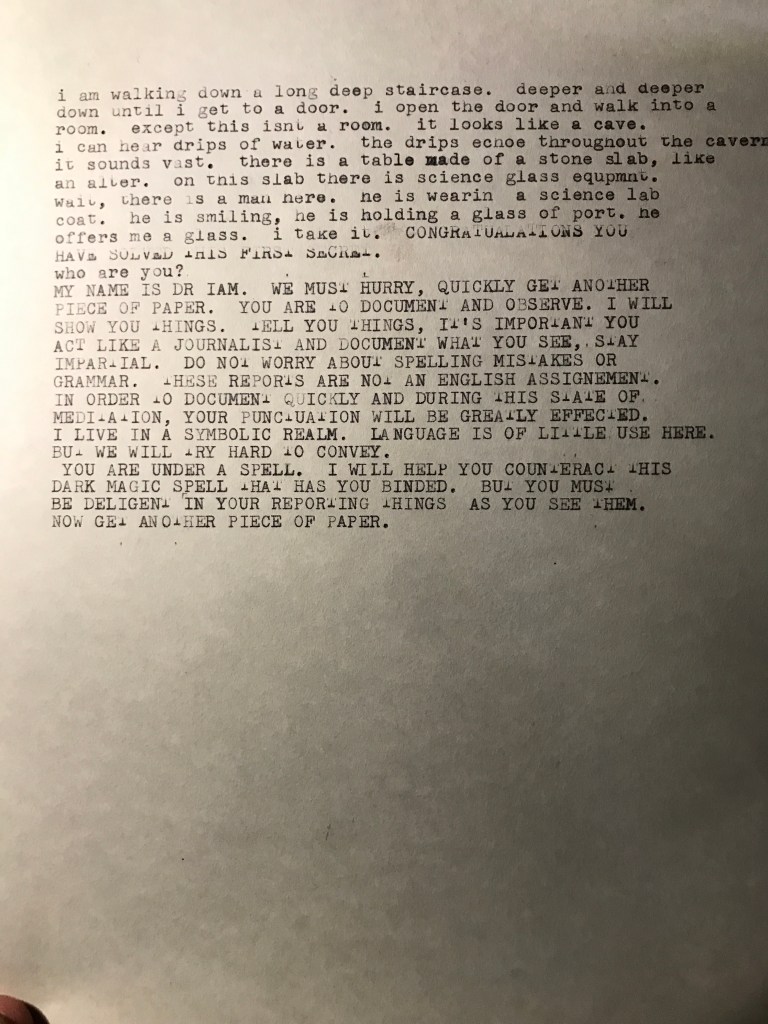
He calls himself Dr Iam….like I am…I am thinking that this is a way to keep myself from loosing myself. I did some research and there is some danger in practicing active imagination. Here are some precautions and warnings.
While active imagination can be a valuable tool for self-exploration and insight, there are some potential risks to be aware of:
- Emotional Intensity: Engaging with your unconscious mind can bring up strong emotions, including ones you may not be prepared to handle. This could lead to feelings of distress, anxiety, or even emotional overwhelm.
- Unresolved Trauma: Delving into your unconscious can potentially unearth unresolved trauma or painful memories. If you’re not adequately prepared or supported, this can lead to retraumatization.
- Loss of Boundaries: Immersing yourself in your imagination might blur the lines between fantasy and reality. It’s important to maintain a clear distinction between your inner world and external reality.
- Negative Self-Perception: If you’re not mindful, engaging in active imagination could reinforce negative self-perceptions or unhealthy thought patterns.
- Confusion: The symbolism and imagery that arise during active imagination sessions can sometimes be ambiguous or confusing. Without proper interpretation, you might misinterpret the meaning of certain symbols.
- Psychological Vulnerability: People with certain mental health conditions, like psychosis or severe dissociation, might find active imagination destabilizing. It’s crucial to approach such practices with caution.
- Dependency: Relying solely on active imagination for self-discovery might deter you from seeking support from real-world relationships or professional guidance.
To mitigate these risks:
- Preparation: Educate yourself about the technique and its potential effects. Understand your own mental and emotional state before attempting active imagination.
- Moderation: Don’t engage in active imagination excessively or for prolonged periods. Give yourself time to integrate the experiences between sessions.
- Support: If you’re uncertain or dealing with emotional difficulties, consider involving a trained therapist or psychologist who can provide guidance and help you navigate the process.
- Self-Care: Have strategies in place to manage difficult emotions that might arise. This could involve grounding techniques or mindfulness practices.
- Know Your Limits: If you find that active imagination is causing distress, consider taking a step back or seeking professional help.
Remember that while active imagination can be a powerful tool, it’s not suitable for everyone, and its risks should be taken seriously. It’s essential to prioritize your mental and emotional well-being throughout the process.
This is amazing, a journey into my own subconscious. Like a quest. Well that’s all i have for today. Happy journeying if you are attempting this technique yourself. I’ll post more as I discover more. r
 Once Upon a Time there was an Artist Named Garry Sanipass…
Leave a comment