
The Black Madonna is one of the deepest and most mysterious archetypes in the Western spiritual tradition. She sits at the crossroads between the Christian Mary, the Earth Mother, and the ancient goddesses of fertility, wisdom, and transformation. Let’s unfold her meaning layer by layer:
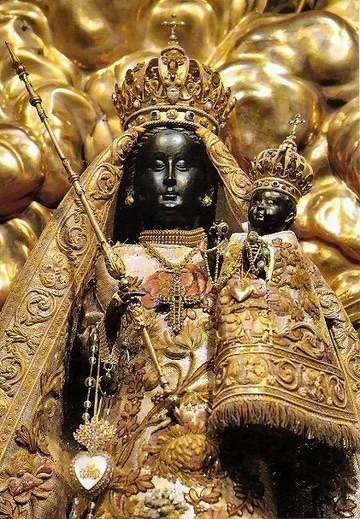
🌑 1. The Surface Image
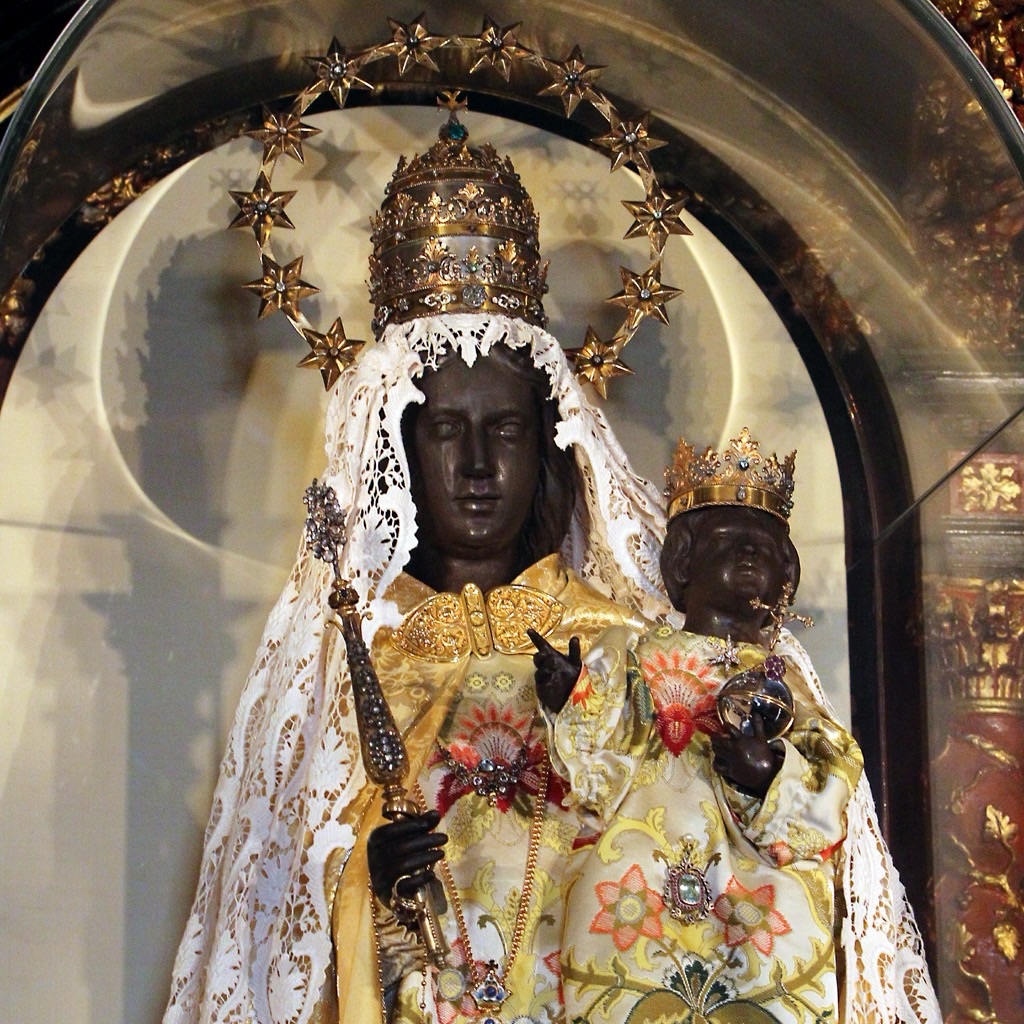
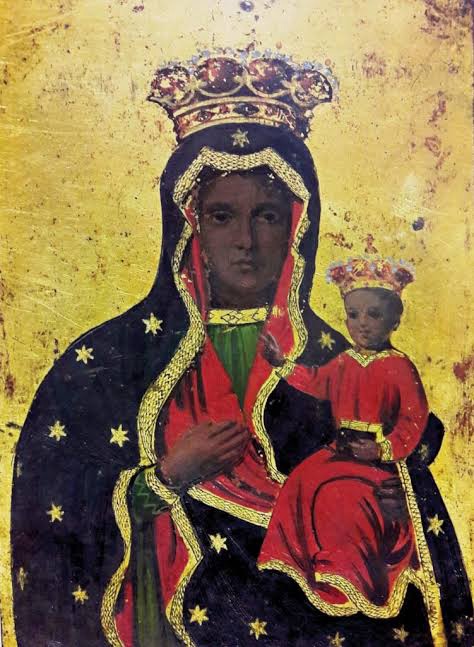
A Black Madonna is a dark-skinned or black-painted statue or icon of the Virgin Mary, often with the child Jesus. There are hundreds across Europe — most famously at Czestochowa (Poland), Montserrat (Spain), and Chartres (France).
Scholars have long debated whether their dark colour is due to:
Smoke from candles and age, or A deliberate symbolic choice.
In many cases, it was deliberate — because the Black Madonna represented something deeper than the sanitized white Madonna of later centuries.
🌍 2. Archetypal Meaning — The Dark Mother / Earth Mother
In Jungian and mythological terms, the Black Madonna symbolizes:
The chthonic (earthly) feminine — fertility, soil, death, and rebirth. The womb of the Earth — the place of transformation and renewal. The mystery of life and matter, where spirit becomes embodied.
She is “black” not as a racial identifier, but as an alchemical one — the nigredo, the first stage of transformation, where matter must decay and darkness must be embraced before light can emerge.
🜂 3. Psychological / Alchemical Dimension
In Jungian alchemy, the nigredo represents:
“the dark night of the soul — the phase when consciousness descends into the unconscious.”
The Black Madonna is that dark night embodied as the feminine — she holds pain, loss, chaos, and the primal power of nature. But within that darkness is the potential for rebirth.
So, she is the womb and the tomb, the same place where endings and beginnings meet.
🕊️ 4. Repressed Feminine Energy
Culturally, the Black Madonna reappeared wherever the sacred feminine had been repressed by patriarchy or institutional religion.
She is the unassimilated aspect of Mary — the part that couldn’t be controlled, sanitized, or turned into an obedient mother of God.
In this way, she represents:
The return of the repressed feminine. The integration of shadow into the sacred. A demand that spirituality reconnect with the earth, body, and suffering — rather than escaping them.
⚡ 5. The Black Madonna as Transformation
She is not a comfortable figure — she demands descent, truth, and authenticity. To encounter her archetypally is to confront:
Your grief, Your rage, Your lost instinctual nature, and to allow it to be re-sacralized rather than denied.
In that sense, she is both a healer and destroyer, much like Kali in Hinduism or Coatlicue in Aztec myth.
🕯️ 6. In Modern and Indigenous Contexts
For many today — especially women, environmentalists, and Indigenous thinkers — the Black Madonna has become a symbol of Mother Earth, the dark fertile soil that gives life.
Her darkness connects to the land, the night, the mystery, and the ancestral feminine power that predates Christianity.
She represents the restoration of balance — the remembering that divinity is not only light and spirit, but also shadow and matter.
 Once Upon a Time there was an Artist Named Garry Sanipass…
Leave a comment